
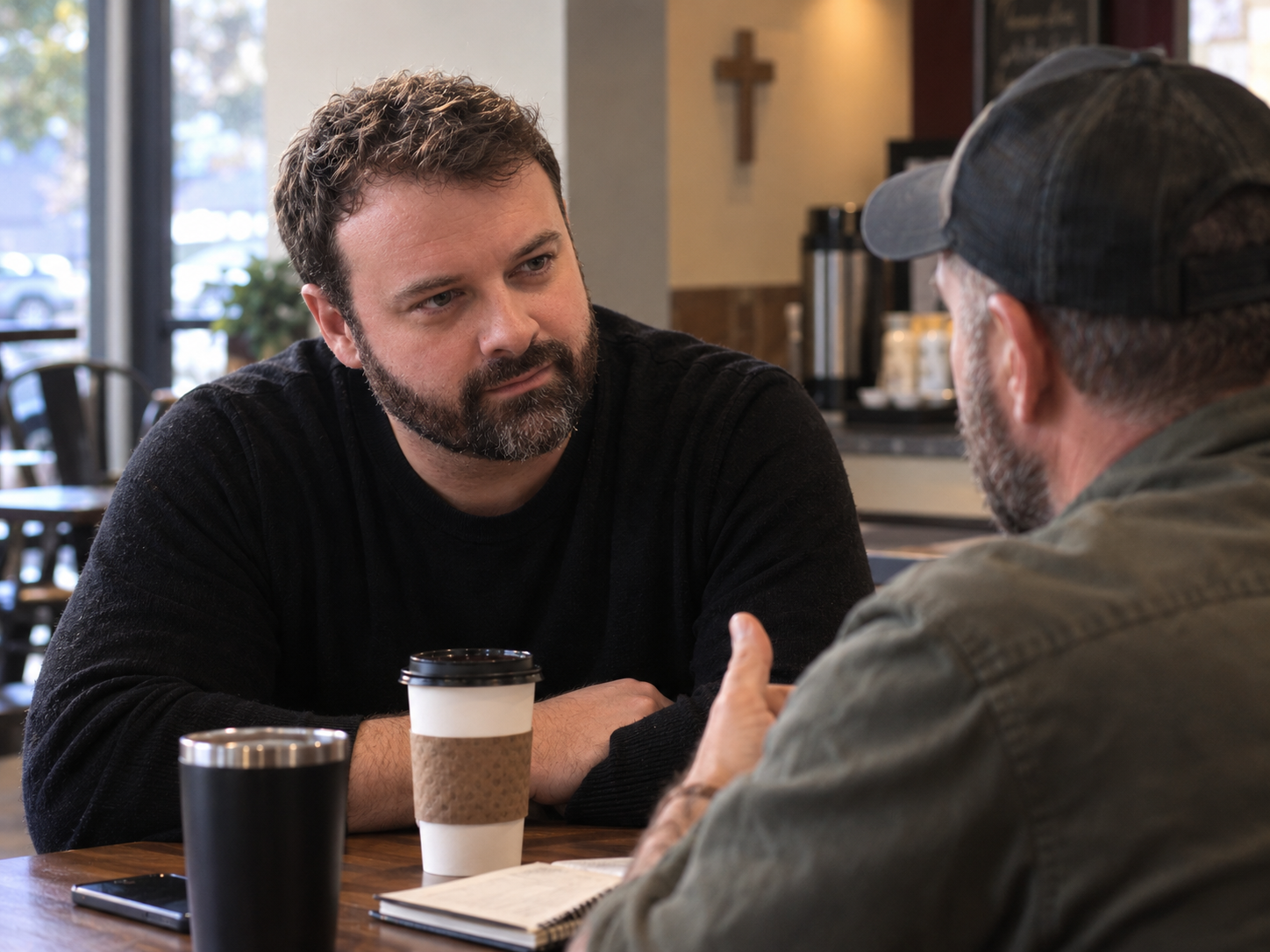
Legal permission leaves the health, impairment, and stewardship questions of cannabis squarely in a man’s hands.
The short version
Survey research associates cannabis use on one to five days per month with higher odds of cardiovascular disease and stroke, while leaving causation unresolved.
Government classification answers a legal question, while stewardship examines health, judgment, spending, and responsibility.
Driving after consuming cannabis edibles transfers the risk of slower reactions and weaker lane control to strangers.
A man seeking relief deserves honest counsel, qualified care, firm boundaries, and friends willing to remain close.
The abstract landed at the American Heart Association’s Scientific Sessions 2026 in Chicago with the bedside charm of a collections notice. Data from 442,906 survey respondents had attached cannabis use to higher odds of cardiovascular disease, with the strongest association appearing around stroke.
The account already had entries. Prior studies had linked marijuana use with abnormalities in brain development, reduced cognitive function, permanent IQ loss, and severe mental health problems. A September study added impaired lane control, slower reaction times, and greater speed fluctuations after people consumed cannabis edibles.
None of that fits the polished sales pitch. The modern cannabis business prefers soft lighting, clean typography, soothing language, and the general air of a company that wants your credit card before your judgment returns from lunch. Scratch that last image. Judgment apparently left the conference room and forgot its badge.
This subject deserves a ledger. Every claim goes on it. Every limitation goes on it. Every human cost goes on it. By the time the figures are sitting together, the usual slogans start looking like a quarterly forecast prepared by a vice president who has already cleaned out his executive office.
The Body Opens the Account
The 2026 research examined responses gathered through the Centers for Disease Control and Prevention’s Behavioral Risk Factor Surveillance System between 2020 and 2024. Respondents described cannabis use through eating, smoking, or vaping. Even use on one to five days per month appeared in the findings.
People reporting cannabis use between one and five days per month had 23% higher odds of reporting a history of cardiovascular disease than nonusers. The researchers classified these respondents as low-frequency users. They also had 40% higher odds of reporting a stroke.
Those words matter. The findings involve reported histories and statistical associations from survey responses. They do not give a physician a time machine, a laboratory, or a direct view inside every respondent’s arteries. The design establishes an association. Causal proof requires a different design.
That limitation belongs in the ledger because honest men do honest accounting. It also gives no license to fling the findings into a wastebasket and resume pretending the product is scented virtue in a glass container.
Aabha Divya, an assistant professor in the division of cardiothoracic surgery at the Tulane University School of Medicine in New Orleans, said earlier studies had produced inconsistent findings around cardiovascular effects. Divya and the research team expected the chances of heart disease to rise gradually as use became more frequent. The data refused to cooperate with that neat line. Both low-use and heavy-use groups had higher odds of developing heart disease.
The study found no statistically significant association between frequency of use and heart attack. Put that on the page too. A man who hides the inconvenient line because it weakens his pitch has joined the same public relations department he claims to despise.
Here is the first entry:
One to five days of use per month was associated with 23% higher odds of reporting cardiovascular disease and 40% higher odds of reporting a stroke.
Men asking whether marijuana is bad for them deserve this degree of precision. They deserve facts stripped of salesmanship from both directions. Panic sells. Permission sells. Truth generally arrives carrying paperwork.
I prefer clean answers as much as anyone. Give me a board deck with one green arrow, one red arrow, and a decision box large enough for my aging eyes. Human bodies decline to operate like board decks. The absence of perfect certainty still leaves a man responsible for the information already in front of him.
Uncertainty changes the size of a claim. It does not erase the claim.
Comfort Sends an Invoice
Previous research cited by Divya found that one in six adults in 2024 reported cannabis use within the previous month. In 2020, the figure was one in 10. Divya described that change as a 51% increase.
That is the second entry. Use rose during the same 2020 to 2024 period covered by the 442,906 survey responses. Recreational legalization expanded across states, and commercial access to cannabis products expanded with it.
Commercial access carries its own theology. If a product has investors, packaging, tax revenue, lobbyists, and a respectable storefront, the culture begins treating it as morally housebroken. The transaction becomes the absolution. A receipt appears, therefore wisdom has spoken.
That logic would get a chief financial officer escorted from a budget meeting.
Markets perform one job with brutal efficiency: they connect desire with supply. They make no promise that the desire is honorable, healthy, or fit to enter a home. A legal market can distribute a useful tool. It can also industrialize weakness, place branding around escape, and send shareholders a cheerful presentation about growth.
I believe in free markets because concentrated government power has a remarkable record of showing up late, spending too much, and asking for another department. I also believe liberty leaves the moral burden on the person exercising it. The state’s permission slip cannot carry a man’s conscience.
Marijuana is sold as relief, recreation, sleep, social ease, and personal choice. Some men approach it carrying pain that is physical, psychological, or both. Treating those men as cartoons is cruel and lazy. Pain narrows a room. Relief starts looking like the only unlocked door.
Still, compassion requires enough courage to examine the door. A substance tied in prior studies to cognitive decline, permanent IQ loss, mental health problems, and abnormalities in brain development demands more scrutiny than a slick label and a soothing adjective.
A purchase becomes a stewardship decision the moment it enters your body, your bank statement, your vehicle, or your home.
The ledger now holds increased use, expanded commercial access, cardiovascular associations, and previous links to cognitive and mental health harms. The sales presentation keeps smiling. Sales presentations always smile. Somewhere, an executive has selected a shade of green that supposedly means wellness.
The Steering Wheel Collects Too
The September study examined people who had consumed cannabis edibles and then drove. The findings described trouble maintaining lane control, slower reaction times, and greater fluctuations in speed.
That entry reaches beyond the user’s body. A vehicle moves through shared space. The driver beside you never consented to become a variable in another man’s relaxation plan.
We have developed an impressive vocabulary for avoiding plain speech. We call it impairment, altered response, or reduced performance. The metal guardrail has less interest in vocabulary. So does the parent fastening a child into a restraint before leaving a parking lot.
A man can argue that his use is private. The argument ends when slowed reaction time meets a public road. Private choices have a habit of applying for public office.
The findings around edibles deserve care. They describe the driving effects found in that September study. They do not turn every user into a reckless driver. They establish a specific danger involving lane control, reaction time, and speed consistency after cannabis edible consumption.
That distinction protects people from being smeared. It also protects the facts from being diluted into mush.
The ordinary man driving home after a long shift deserves tenderness here. He is carrying his own fatigue, bills, deadlines, and worries. He should not have to calculate whether the vehicle drifting toward the lane marker is operated by someone whose reaction time has been dulled by a product marketed as harmless relief.
The young man headed toward work, church, class, or a friend’s house deserves the same consideration. His future should not rest on another driver’s confidence that he “handles it fine.” Confidence is cheap. Body panels are less accommodating.
Here is the third entry:
- Lane control worsened in the September study.
- Reaction times slowed.
- Speed fluctuated more.
A man who uses cannabis and drives has moved the cost onto strangers. The moral question becomes painfully direct. He wanted comfort. Somebody else received exposure to the risk.
Freedom loses its dignity when another person is forced to carry the downside.
Washington Changes the Label
The Trump administration decided to reschedule marijuana from a Schedule I drug to a Schedule III drug. That decision entered a political environment already shaped by state legalization campaigns, lobbyists, commercial interests, and growing use.
Schedule numbers have tremendous ceremonial power in Washington. Change a Roman numeral and every consultant within reach begins describing history as if he personally wrestled it into submission.
Rescheduling changes the government’s classification. It does not settle the cardiovascular findings presented in Chicago in November 2026. It does not restore lane control documented in the September study. It does not reverse prior links involving cognitive function, IQ loss, brain development, or mental health.
Government classifications answer government questions. Stewardship asks a harder set of questions. What does this product do to judgment? What does it do to health? What responsibilities suffer when the user is impaired? Who else sits inside the circle of consequences?
Politicians prefer broad nouns such as freedom, reform, justice, revenue, and medicine. Broad nouns provide excellent cover during a press conference. A man living with the consequences deals in specific nouns: a physician’s notes, a vehicle repair estimate, a missed meeting, a strained relationship, a credit card charge, a disciplinary notice, a frightened family member.
Legalization advocates often point to the damage created by prohibition. That argument carries weight. Criminal penalties can become blunt instruments. Enforcement can consume public money, distort priorities, and punish conduct in ways that outstrip the offense. Government has never met a blunt instrument it could not place in a larger budget request.
Legalization opponents point to health risks, impairment, mental health concerns, and the commercial machinery that follows legal access. That argument carries weight too. A legal industry has every incentive to increase customers, frequency, product variety, and cultural acceptance. No board approves a growth strategy centered on persuading customers to use less.
The political dispute therefore contains two separate questions. One concerns the proper reach of criminal law. The other concerns the wisdom of consuming cannabis. Combining them lets both camps escape scrutiny.
A man can reject excessive government punishment while also refusing marijuana. He can defend constitutional limits while telling the truth about impairment. He can distrust federal drug policy and still keep a product out of his body and home.
Liberty gives a man room to govern himself. It never promises he will govern himself well.
The ledger now includes the Schedule I to Schedule III decision. It also includes a warning against allowing Washington’s classification system to perform moral reasoning on our behalf. The federal government has trouble balancing paperwork. I decline to hand it my conscience.
The Home Keeps Its Own Books
The 2020 to 2024 increase from one in 10 adults to one in six adults using cannabis within the previous month did more than enlarge a consumer category. It changed what enters homes, conversations, vehicles, social circles, and expectations.
Every home has a culture, even the home of a single man. The objects in it preach. The recurring charges on the bank statement preach. The substances kept within reach preach. They announce what the occupant uses for rest, courage, escape, celebration, grief, and control.
For a husband or father, those messages reach people he has pledged to protect. For a single man, they shape the character he carries into future commitments, friendships, leadership, and service. The standard reaches every man because every man is becoming someone in private.
False comfort sends a bill. Sometimes the charge appears in health. Sometimes it appears in diminished attention, altered judgment, or a relationship forced to absorb the mood and behavior of an impaired person. The September driving findings show how quickly that bill reaches a stranger.
No one needs a lecture delivered from a polished church pew by a man pretending he has never searched for relief in the wrong place. I have wasted hours in lesser forms of escape and then acted surprised when the work remained exactly where I left it. Apparently, neglected obligations lack the Christian virtue of disappearing.
The issue is mastery. A man reaches for a substance because he wants something from it. Relief. Distance. Sleep. Belonging. Silence. The transaction changes when the product begins setting the conditions under which he rests, socializes, or handles discomfort.
The moral language here has to stay humane. Some users carry severe pain. Some have received conflicting messages from physicians, politicians, commercial sellers, friends, and public campaigns. Some have built habits they struggle to break. Shame alone is a poor instrument for restoration.
Grace tells the truth while leaving the door open.
That means a man deserves help without being reduced to his habit. It means family members deserve safety without being ordered to call chaos compassion. It means friends can ask direct questions without performing a courtroom drama in the living room.
If cannabis use is present in your home, write down the frequency. Use the same plain measurement used in the 2026 research: days per month. Record the method, whether eaten, smoked, or vaped. Record any driving afterward. Record missed obligations, unusual anxiety, memory problems, conflicts, and money spent.
Bring that record to a qualified healthcare professional. Divya specifically urged conversations about cannabis and cardiovascular health alongside conversations about tobacco, alcohol, and other commonly used substances. Tell the truth about frequency. “Sometimes” is a fog machine. One to five days per month is a number.
If another person’s use brings impairment into your vehicle or home, establish the boundary in concrete terms. No driving after use. No riding with an impaired driver. No product stored where a child or another vulnerable person has access. No pretending that slowed reaction time becomes safe through confidence.
Those boundaries arise from the findings in front of us. They are specific, measurable, and hard to charm with packaging.
The Heart Is More Than Plumbing
The American Heart Association’s Scientific Sessions 2026 placed the cardiovascular question in the room. The study found higher odds of cardiovascular disease among both low-use and heavy-use groups, with the strongest association involving stroke. Frequency and heart attack had no statistically significant association.
Those findings concern the physical heart. Stewardship also concerns the will directing the body.
A Christian view of the body resists two fashionable lies. The first says the body is merely equipment, available for whatever experience the owner wants to purchase. The second says physical discipline earns moral superiority. Both end with a man staring at himself.
Stewardship begins with receipt. Breath, strength, intelligence, time, money, influence, and the capacity to choose arrive as gifts placed under management. A steward asks what serves the purpose of the gift. He also asks what degrades his ability to carry responsibility.
That question makes false comfort morally serious. A product associated with higher odds of stroke, previous cognitive harms, severe mental health problems, and impaired driving cannot be filed under harmless recreation through sheer repetition.
Morality enters because people enter. Judgment affects promises. Health affects dependence and provision. Impairment affects strangers on the road. Spending affects other obligations. A substance never needs horns and a pitchfork to become spiritually expensive. A recurring charge and an excuse will do.
Faith also forbids contempt. A man wrestling with dependency remains a man bearing dignity. His family members remain people with limits, wounds, and legitimate claims to safety. His physician deserves accurate disclosure. His employer deserves the level of judgment promised in the employment agreement. His neighbors deserve sober conduct behind the wheel.
There is a tenderness owed to the man who reaches for relief because his mind will not quiet down. He needs truth, qualified care, patient friends, and room to rebuild habits. He does not need an industry treating his pain as customer retention.
There is tenderness owed to the person beside him too. Love never requires someone to rename fear as patience or impairment as personality.
The ledger grows heavier here. The numbers remain exactly what they are. The moral consequences spread beyond the numbers because men live among other people.
Put the Statement Under Good Light
The final account begins with 442,906 survey respondents in the CDC’s Behavioral Risk Factor Surveillance System between 2020 and 2024. It includes cannabis consumed through eating, smoking, and vaping. It includes low-frequency use on one to five days per month.
It records 23% higher odds of reporting a history of cardiovascular disease among those low-frequency users compared with nonusers. It records 40% higher odds of reporting a stroke. It records higher odds of heart disease among low-use and heavy-use groups. It also records no statistically significant association between frequency of use and heart attack.
It adds one in six adults in 2024 reporting cannabis use within the previous month, compared with one in 10 in 2020, a change Divya described as a 51% increase.
It adds the September findings around weaker lane control, slower reaction times, and greater speed fluctuations after cannabis edible consumption. It adds the Trump administration’s decision to move marijuana from Schedule I to Schedule III.
It adds earlier research linking use with abnormalities in brain development, reduced cognitive function, permanent IQ loss, and severe mental health problems.
The ledger still leaves room for honest limits. Association remains association. Survey responses carry the boundaries of survey responses. The heart attack finding failed to reach statistical significance. Inconsistent prior cardiovascular findings led Divya and the team to expand the inquiry.
That is the account. A serious man does not erase liabilities because the marketing department bought nicer furniture.
If you use cannabis, place your own record beside these findings. Count the days per month. Name the method. Identify every instance of driving. Review the spending. Write down the reason you reach for it and what happens afterward. Take the cardiovascular question to a qualified healthcare professional using numbers instead of euphemisms.
If you keep it in your home, decide what your permission communicates. If you lead an organization, review the promises you have made around judgment, safety, performance, and conduct. If a friend is struggling, speak plainly and remain close enough to help him take the next concrete step.
Government can change a schedule. A commercial seller can change a label. Neither can carry your duty for you.
The bank statement lies open. The physician’s number sits nearby. In the driveway, keys rest under the hard white light, waiting for a hand steady enough to pick them up.
What to do about it
This week, write down your cannabis use in days per month, the method, the money spent, every instance of driving afterward, and what you were seeking each time. Add any missed obligations, memory trouble, anxiety, or conflict.
Take that page to a qualified healthcare professional and ask directly about cardiovascular and mental health risks. Give exact frequencies instead of “sometimes,” and discuss another plan for pain, sleep, anxiety, or escape.
Set one immediate boundary: no driving after use and no riding with an impaired driver. Leave the keys under the hard white light until a sober hand can carry them.
Faith. Finance. Focus.
Strong Men. Strong Homes. Strong Businesses.
Discover More: mrwhatley.com
All My Links: mrwhatley.com/connect
Ready to Be a Better Man? mrwhatley.com/check-in
Free Course: mrwhatley.com/free
couragediscipleshipdisciplinefaithhard conversationsresponsibility