
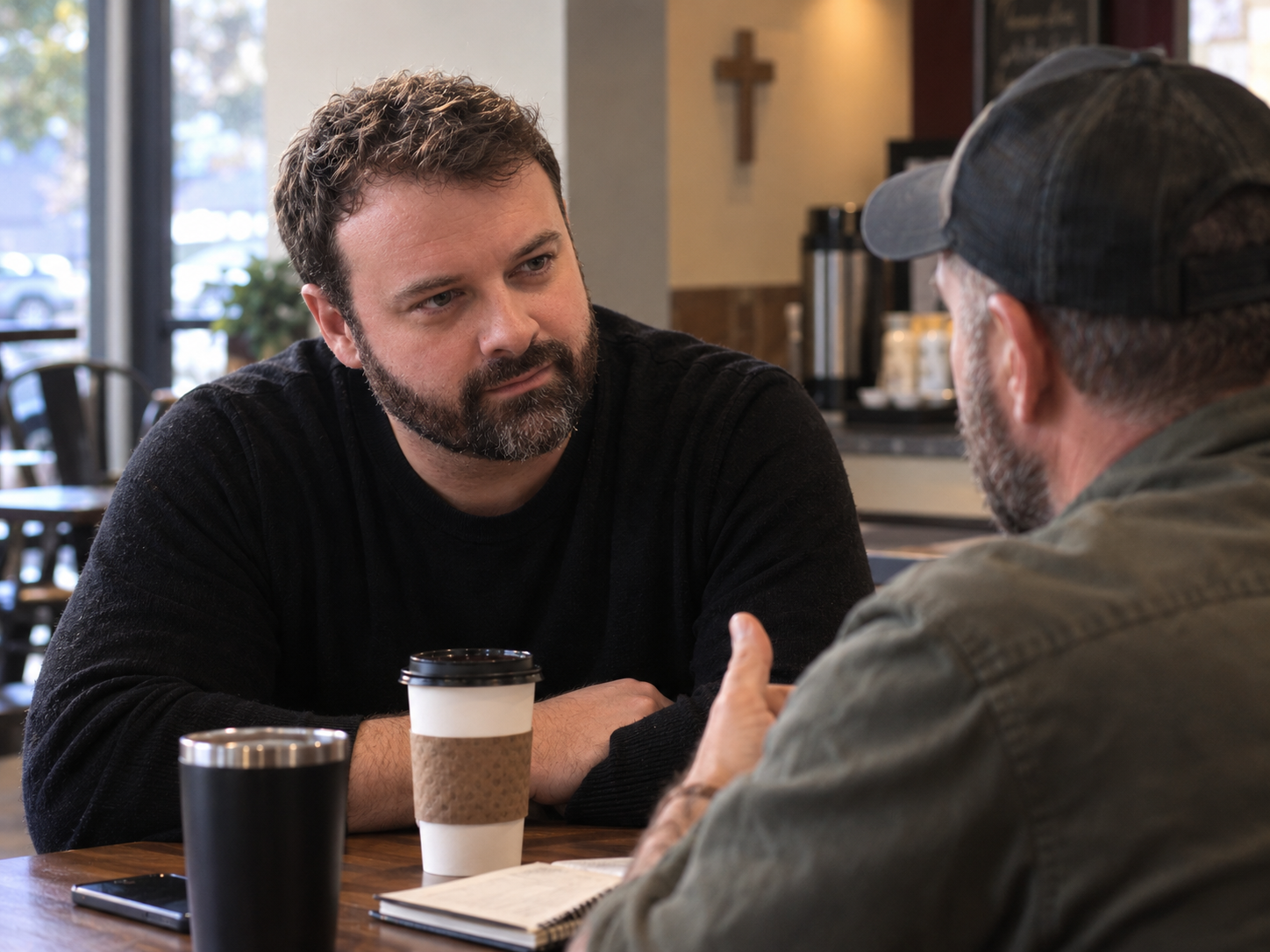
A child’s genetic origin deserves plain language before parental fear turns delayed disclosure into a second wound.
The short version
A child’s genetic origin belongs in the child’s own history, delivered early enough to grow with understanding.
Use concrete words such as embryo, pregnancy, DNA, parent, and donor when donor accurately describes the circumstances.
Pair biological facts with steady assurance that belonging is carried through love, responsibility, presence, and kept promises.
Expect questions, silence, anger, or curiosity without asking the child to manage the adult’s emotions.
The school form asks for inherited traits, and the pencil stops above the blank. Across the room, his child studies a framed photograph, unaware that one parent carried the pregnancy while neither parent supplied the DNA.
He knows the answer. He also knows the answer requires a conversation he has postponed so many times that postponement now feels like policy.
The form goes into a folder. The folder goes into a bag. The bag lands by the door.
That is how family secrets acquire office space. Nobody announces them. They simply keep getting renewed.
The Blank on the Form
He tells himself the school form is harmless. It probably is. School forms are usually harmless, except to grammar, dignity, and anyone forced to find a working printer after the ink warning begins blinking like a federal indictment.
The child wants help. Eye color. Hair. Height. Features that resemble one relative or another. The assignment assumes DNA moves through the family in a straight line, as clean as an org chart prepared for a board meeting.
This family arrived by another route. An embryo from someone else became a pregnancy carried to term by a parent. The child shares none of the parents’ DNA.
The father knows this. The child does not.
He points toward a trait visible in the mirror and says something vague about families sharing many things. The sentence is warm, technically defensible, and built like a hallway with every door locked.
His child accepts it because children begin with trust. They assume the adults in the room know where the exits are.
He tells himself the fuller explanation belongs to adulthood. Adults understand embryos. Adults understand DNA. Adults understand that parenthood can involve pregnancy without genetic relation.
Adults also understand tax forms, and plenty of grown men still stare at those as if the government has mailed them a riddle from an ancient civilization.
Understanding does not arrive on a birthday. It is built through smaller truths given early enough to become part of a person’s own history.
The child returns the form to the folder. No alarm sounds. No committee appears. The father wins another delay.
He has also taught a quiet lesson: when a fact feels awkward, an adult can replace it with a pleasant cloud of words.
A child’s identity should never depend upon a parent’s tolerance for discomfort.
There is tenderness in his hesitation. He wants to protect the child from confusion. He fears a careless sentence will make the family feel fragile. He remembers the pregnancy, the waiting, the private hopes, and every moment that made this child fully his in duty and love.
Those memories deserve respect. So does the child who stands in front of him holding the pencil.
Love explains why he wants to protect. Stewardship tells him protection requires truth.
The Medical Portal Knows Less
Later that morning, a medical portal asks for family history. Boxes appear beside conditions and relatives. The screen expects DNA to line up neatly with parentage.
He clicks through the page. He answers where he can. He leaves blank what he cannot honestly answer.
The child passes behind him and asks what he is doing.
“Paperwork,” he says.
Technically, the paperwork has no paper. Government agencies and medical offices performed this miracle years ago. They removed the paper while preserving every ounce of irritation.
The child moves on. The moment vanishes.
Again, the father misses what has happened. The question has already entered the room. The portal knows that genetic history matters, even if the child has never heard why the family history boxes require different answers.
This is the second touch of the day. The first came through school. The second arrives through medicine. Adulthood has started sending advance notices.
The father’s concern has shifted from privacy to control. He wants to choose the proper setting, the proper words, the proper emotional temperature. He wants a board deck for the human soul.
I understand the impulse to prepare. Give me a difficult conversation, and I can spend an embarrassing amount of time adjusting the imaginary conference room before saying the first honest sentence. Apparently, courage requires excellent lighting and a fully charged device.
The perfect setting never arrives. A child asks from the hallway. A form appears. A relative says something careless. A medical question opens a door.
Silence leaves those moments available to everyone except the parents.
That matters because information about embryos and DNA carries two separate questions. The first concerns biology: Where did my genetic material come from? The second concerns belonging: Am I truly yours?
A wise parent answers both.
The biological answer should use concrete nouns. Embryo. Pregnancy. DNA. Parent. Donor, if that word accurately describes the circumstances. Euphemisms create confusion because children hear the strain beneath them. A soft voice cannot rescue a slippery sentence.
The answer about belonging comes through years of presence, responsibility, affection, correction, sacrifice, and kept promises. Words still matter. The child deserves to hear those words directly rather than infer them from family habits.
A plain explanation can sound like this:
You began as an embryo created from other people’s DNA. One of your parents carried you through pregnancy. We became your parents, and you belong in this family.
The wording changes with the child’s ability to understand. The facts remain steady. No elaborate speech is required. No cinematic music begins. The ceiling fan keeps turning. The child often asks a practical question that sends the parent’s carefully rehearsed remarks into the wall.
That is fine. The conversation belongs to the child too.
Candor in the Conference Room
By midday, the father sits in a conference room with his leadership team. A contract has developed a problem. Somebody softened a key sentence, somebody else assumed the problem would disappear, and now the organization owns a stack of avoidable confusion.
He speaks firmly about candor.
Say difficult things early, he tells the team. Bring bad information forward. Give people the facts while they still have room to respond.
He means every word.
This is the third touch of the day, and he misses it completely.
Public conviction comes easily when the subject lives on a P and L statement. The numbers sit still. The contract does not ask whether you love it. A direct report seldom looks at you and wonders whether a sentence has altered his entire sense of self.
Home exposes whether a man’s principles have roots.
Integrity begins where the audience disappears.
A man can preach candor under fluorescent lights and practice concealment down the hall from his own bedroom. He can demand that employees disclose risks while treating the origin of his child’s DNA as classified material. He can sound brave in the quarterly review and become a fog machine in private.
I have delivered confident remarks in conference rooms and later realized I had constructed a magnificent sentence around an empty center. It happens. A suit can make nonsense feel licensed.
The father’s silence does not prove malice. It reveals fear. The distinction matters because complicated people deserve more than a verdict.
He fears the child will hear genetic difference as emotional distance. He fears anger. He fears questions about the people whose DNA formed the embryo. He fears that words such as “someone else” will create a crack in a family built through pregnancy, choice, and daily care.
Those fears deserve a chair in the room. They do not deserve the chair at the head of the negotiating table.
The child owns the identity involved. The parents carry responsibility for communicating it faithfully. That responsibility remains even when the facts make the adults uncomfortable.
Parents already make decisions for children every day. They choose names, homes, schools, doctors, routines, boundaries, and which relatives receive access to private matters. Authority accompanies the role.
Authority becomes dangerous when it quietly converts another person’s history into parental property.
Your discomfort belongs to you. Your child’s origin belongs to your child.
That sentence carries weight beyond embryos. Men often speak about family as if the word itself proves courage. We defend parental authority, family bonds, and the duty to raise children without institutional interference. Good. Those convictions matter.
They also create a private obligation. A man who wants the state, the school, the clinic, and the culture to respect his family must treat the people inside that family with equal seriousness.
Family leadership cannot survive on slogans framed for public display. It lives in the conversation you would rather reschedule.
The Story He Keeps Editing
The afternoon brings a call from a relative. The child is nearby, occupied with something else, while the adults discuss a family resemblance.
The relative means no harm. Most people reach for resemblance because it offers an easy bridge between generations. The nose came from one side. The expression came from another. Everybody gets assigned a feature, as if the family were closing out assets after a merger.
The father redirects the conversation.
He has become skilled at redirection. Skill does not make the practice wise.
The child catches only a fragment and asks who shares the same eyes. The father answers with another gentle blur.
That makes four separate touches before the day has ended: the school form, the medical portal, the conference room discussion about candor, and the relative talking about inherited features.
The child catches none of the pattern. The father catches none of it either.
The reader does.
Parents who delay disclosure often frame the decision as timing. Timing matters. A young child and an adult process the word embryo differently. A careful parent respects maturity and emotional capacity.
Yet timing without a plan becomes concealment wearing a wristwatch.
Men searching for how to tell their children about an embryo created from other people’s DNA usually want the perfect script. The better work begins earlier: decide which facts belong to the child, remove the shame from your own voice, and choose words you can repeat without changing the core account.
Make the truth familiar before a crisis makes it dramatic.
Start with the nouns the child can understand. Add detail as questions become more sophisticated. Keep the central facts consistent. If one parent carried the pregnancy, say so. If neither parent supplied the DNA, say so. If some information remains unknown, say that too.
“I do not know” carries more honor than invented certainty.
Parents sometimes fear that early truth will burden a child. That concern deserves respect. Children should not carry adult anxiety, unresolved grief, or the emotional responsibility of reassuring their parents.
Give them their history without handing them your panic.
That requires preparation. The adults should settle their vocabulary first. They should agree on the known facts. They should decide which private details involve other people and require care. They should expect repeated questions rather than one ceremonial announcement.
The child will interpret the conversation partly through the parents’ faces. A trembling voice communicates danger. A defensive tone communicates shame. An overproduced speech communicates that the adults have been holding a board meeting about the child’s existence.
Plain affection carries the moment better.
You wanted this child. You accepted responsibility. One parent carried the pregnancy. Other people supplied the DNA that formed the embryo. These facts can share the same room.
Human beings can hold more than one relationship to their origin. Genetics matter. Pregnancy matters. Daily parenthood matters. None requires the erasure of another.
Secrecy Charges Interest
The father leaves work believing he has protected the family for one more day. He experiences relief.
Relief is persuasive. It arrives immediately, which gives it an unfair advantage over consequences that wait.
The unpaid cost sits elsewhere. Every delayed conversation increases the chance that the child will eventually receive two revelations at once. The first concerns the embryo and the absence of shared parental DNA. The second concerns the years during which the parents knew and withheld it.
The first fact shapes identity. The second can shape trust.
This does not guarantee anger or rupture. People respond differently, and no honest writer can promise an emotional outcome. The basic conflict remains plain: delayed truth forces the grown child to reconsider both origin and memory.
Old conversations receive new meanings. Medical forms look different. Comments about resemblance sound rehearsed. Family jokes acquire edges. Photographs stay the same, yet the person viewing them has changed.
A secret about a child eventually becomes a secret kept from an adult.
Adulthood does not make disclosure easier. It raises the stakes because the adult can count the years.
The defense often sounds reasonable. We wanted to protect you. We were waiting until you could understand. We loved you so deeply that we feared hurting you.
All of that can be sincere. Sincerity and wisdom occupy different seats.
The adult child can love the parents and still feel betrayed. Gratitude and anger can exist together. Loyalty does not erase the question: Why did everyone else get to know before I did?
A man should take that question seriously before the child has enough years to ask it with a calendar in hand.
This is where public convictions about family receive their private audit. We say parents should lead. Leadership means carrying information responsibly. We say children belong with people committed to their good. Commitment includes telling the truth about the child’s own body. We say families deserve privacy. Privacy protects a family from outsiders. Secrecy withholds identity from the person at its center.
Those distinctions require courage because they eliminate several convenient hiding places.
The father cannot blame the school form. The school did not create the embryo. He cannot blame the medical portal. The portal merely exposed missing genetic information. He cannot blame the relative. The relative stepped into a gap the parents had left open.
He owns the conversation.
That ownership includes seeking qualified help when the adults cannot speak without collapsing into conflict or fear. The purpose of help is specific: establish accurate language, protect the child from adult emotional burdens, and prepare for questions about pregnancy, DNA, and the people connected to the embryo.
Outside help should support parental honesty. It should never become another waiting room where the truth sits under fluorescent lights for several more years.
The Child Gets a Voice
At home, the child asks to look through family photographs. There is one from the pregnancy, one from the hospital, and many from the years after. The father turns each page and tells familiar stories.
He describes the waiting. He describes holding the child. He describes a small expression everyone remembers.
These are true memories. They belong to the family.
The embryo also belongs in the account.
A truthful family history does not reduce parenthood to DNA. It refuses to pretend DNA means nothing simply because the adults fear its emotional force.
Children deserve room to decide what their genetic origin means to them. Some will ask many questions. Some will ask one and return to whatever occupied them before. Some will revisit the subject as their understanding changes.
The parent’s task is presence. Answer what you know. Name what you do not know. Avoid demanding a particular emotional response.
A child should never have to perform gratitude for being told the truth.
Neither should a child be instructed to treat the embryo as irrelevant. That verdict belongs to the child, and the verdict can change. Genetic identity can carry medical, personal, and relational meaning. Parenthood carries its own profound meaning. Mature families can honor both without turning the home into a courtroom.
The father may want immediate reassurance.
Do you still see me the same way? Are you upset? You know I am your father, right?
Those questions ask the child to stabilize the adult. Resist them.
Say what remains solid. Say that questions are welcome. Say that love and responsibility remain. Then give the child room.
Silence after disclosure does not equal rejection. Questions do not equal disloyalty. Anger does not erase affection. Curiosity about genetic origins does not cancel the parent who carried the pregnancy or the parent who stayed through ordinary years.
A faithful man can endure a response he did not script.
That endurance is part of fatherhood. It applies to the man raising a child now, the man hoping to become a father, and the man considering what kind of home he wants to build. Children arrive as people, carrying identities that exceed parental plans.
They are entrusted to us. They are never inventory.
This is where humility enters. A parent can make a choice from love and later recognize that fear distorted the communication. He can apologize without turning himself into the injured party.
A useful apology names the act plainly: We should have told you earlier. We allowed fear to delay the truth. You deserved to know your history from us.
Skip the courtroom brief. Skip the list of reasons. The child has already lived inside those reasons.
The Conversation Still Waiting
The day winds down. The school folder remains by the door. The inherited-traits form is still inside it. The medical portal has logged out. The conference room stands empty, chairs pushed back from the negotiating table.
The father sits near the child and considers saying something.
This is the opening he claimed to want. There is time. The room is familiar. No institution is pressing him. No relative is speaking. The facts are available.
He decides the child looks tired.
Tomorrow will offer a better moment.
Tomorrow is the favorite jurisdiction of frightened men. Every difficult duty gets a fair hearing there, and no verdict is ever enforced.
He turns off a lamp.
The child asks one final question about the photograph from the pregnancy. The father answers the smaller question with care. His voice is gentle. His love is obvious.
He still avoids the embryo.
In the dim room, the photograph holds the pregnancy, the parent who carried it, and the child who came from DNA supplied by other people. The whole truth is already present.
Only the words remain outside.
What to do about it
If embryo donation is part of a child’s story under your care, write the known facts on one page this week. Mark what remains unknown, choose accurate words for embryo, pregnancy, DNA, parent, and donor, and remove every phrase designed mainly to calm the adults.
Settle that vocabulary with every responsible adult who may speak about the child’s origin. Choose a familiar hour for the first conversation, give a brief account suited to the child’s understanding, and leave room for questions that may return later.
Afterward, record the available genetic medical history and the gaps so future forms receive honest answers. Before the next form arrives, place the whole origin beside the family photograph in words the child can carry.
Faith. Finance. Focus.
Strong Men. Strong Homes. Strong Businesses.
Discover More: mrwhatley.com
All My Links: mrwhatley.com/connect
Ready to Be a Better Man? mrwhatley.com/check-in
Free Course: mrwhatley.com/free
couragefamilyfatherhoodfocushard conversationsresponsibility